
Stakeholder workshop in Sao Paulo
On 1st April 2025, we hosted the third workshop of the MNEDEVELOP research project at FGV Sao Paulo. The event brought together stakeholders who had participated in interviews, including representatives from multinational companies (headquartered in Europe with subsidiaries in Brazil and Colombia), NGOs, community leaders, social entrepreneurs, and others. Together we engaged in a rich exchange of experiences and learning.


During the workshop, we discussed the motivations and mechanisms that underpin the interactions between multinationals and communities, and the outcomes for multinationals, vulnerable populations, MNE’s partners (such as NGOs and community enterprises) and society. Key points discussed include:
Motivations: regulation such as compliance with national environmental laws or employment requirements for vulnerable populations, COVID-19‘s impact on social issues, global sustainability strategies (e.g., increasing recycling rates), corporate values, external pressures from NGOs and activists, and commitments made in global forums such as the UN Sustainable Development Goals.
Mechanisms: donations (e.g., financial contributions to local schools and NGOs), sponsorship (e.g. sponsoring local sports teams), training and education related to employment (e.g., workshops on digital skills), HR policies promoting fair labour practices, diversity, and inclusion, employee volunteering, use of corporate foundations (to fund and develop projects), incentive laws (tax breaks for social initiatives), tax benefits (deductions for charitable contributions), marketing strategies, integration of vulnerable populations into the supply chain and partnerships or collaborations with third parties such as NGOs and community enterprises.
Benefits for:
- Multinationals: Social License to Operate (SLO), legitimacy, innovation in socially responsible products and services, competitive advantage, enhanced reputation and recognition that the company is socially responsible, thereby enhancing brand and corporate image and employee attraction and retention.
- Vulnerable populations: higher wages, increased employability through participating in apprenticeships and job training programs, promoting entrepreneurship through training in micro-entrepreneurship skills and psychological benefits such as increased autonomy and self-confidence.
- Partners: long-term relationships, tailored initiatives, consistent resource flow, and scaling of successful programmes.
- Society: contributions to SDGs and promoting public awareness of social and environmental issues.
While, the results suggest that certain companies remain reactive and focused on short-term initiatives (e.g., philanthropy). To foster long-lasting integration of vulnerable populations, businesses must redesign HR policies (e.g., to use inclusive hiring practices), product development (e.g., co-create products with input from vulnerable populations), logistics (e.g., using local suppliers), and procurement (e.g., sourcing from suppliers from vulnerable populations) to provide mutual gains.
The study also reveals that well-intentioned efforts may not always align with the actual needs of vulnerable populations. Collaborating with credible partners such as NGOs is crucial, as they possess localised knowledge and and can assist with project implementation (infrastructure and human capital), enabling MNEs to address specific vulnerable populations’ needs more effectively.
Stakeholder workshop in Medellín
On 2 March 2026, the MNEDEVELOP project brought together business leaders, community organisations, academics, policymakers and civil society representatives at Universidad EAFIT in Medellín for a multi-stakeholder dialogue on the role of multinational enterprises (MNEs) in sustainable development. The workshop formed part of our ongoing effort to engage diverse stakeholders in shaping practical and inclusive pathways for development across Latin America.
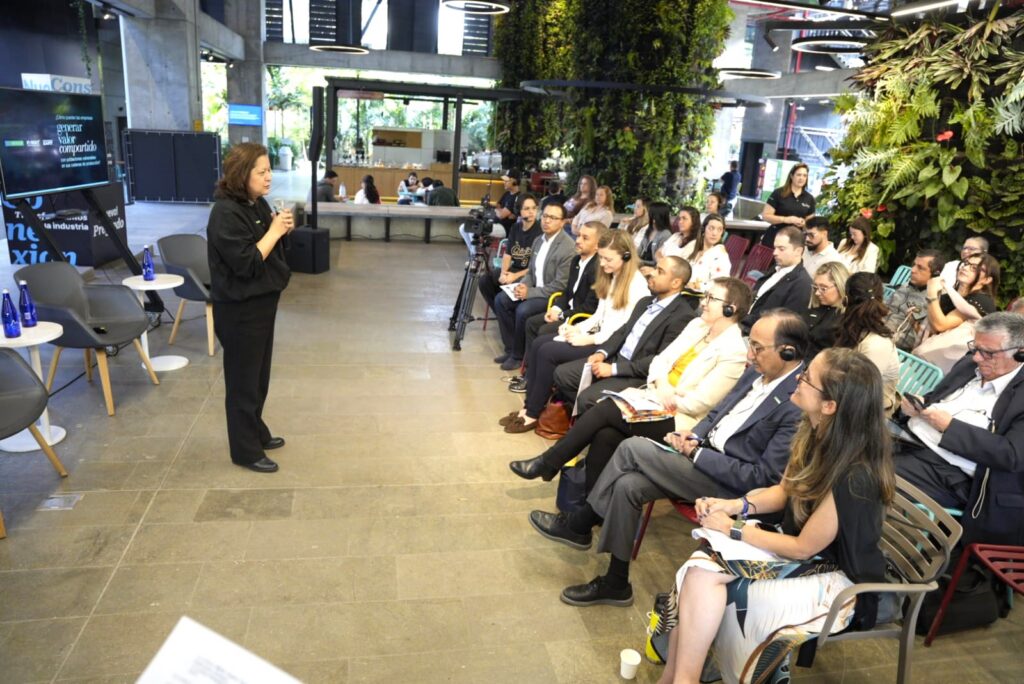

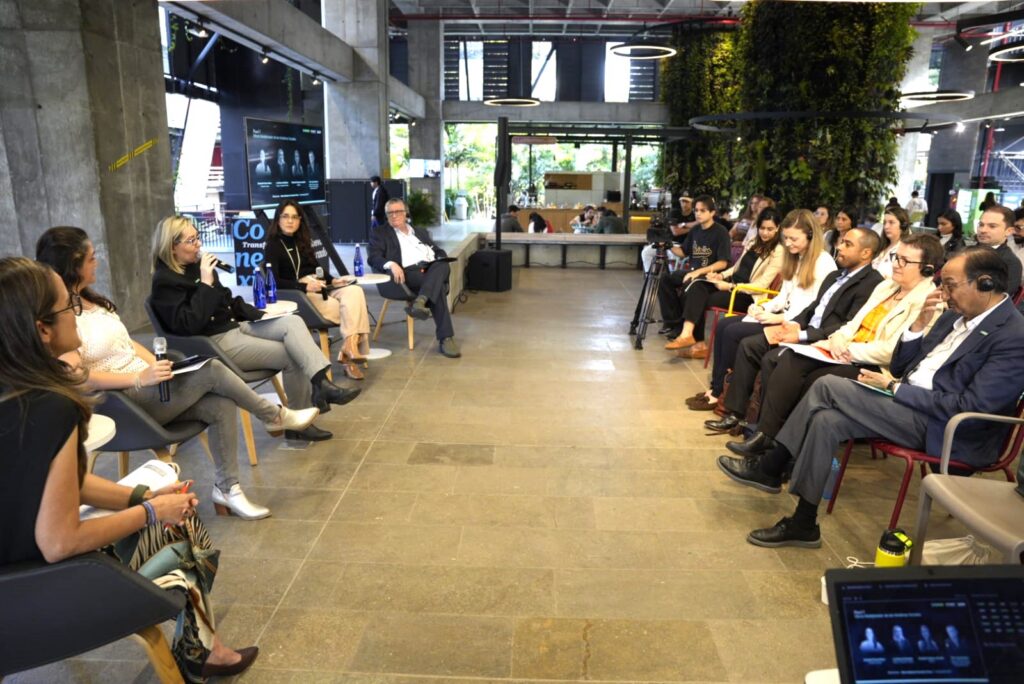
The central question guiding the workshop was: How can multinational enterprises create shared value with vulnerable populations while respecting their autonomy and strengthening their agency?
Across three panels, participants explored:
Multiplier Effects of Corporate Social Initiatives: how corporate social programmes can generate impacts that extend beyond direct beneficiaries, exploring how skills, knowledge and capabilities transfer across communities and local ecosystems. Discussions focused on the conditions under which social initiatives can create broader and more sustainable development outcomes.
Obligation or Responsibility?: whether responsible business practices are driven primarily by regulatory obligations or by genuine corporate commitment. Speakers reflected on the tensions firms face between short-term financial objectives and long-term social and environmental responsibilities, as well as the role of sustainability in shaping corporate decision-making.
Shared Value and Community Autonomy: how companies can build more inclusive and empowering value chains. Discussions addressed issues such as strengthening the bargaining power of small producers, promoting financial inclusion without creating dependency, supporting participatory approaches, and respecting local cultures, identities and territories.
The workshop highlighted both the opportunities and challenges associated with MNE engagement in vulnerable communities. While effective collaborations can strengthen capabilities, create economic opportunities and foster resilience, participants also emphasised the need to avoid unintended consequences that may reinforce inequalities or undermine local autonomy. These conversations reinforced the importance of designing development initiatives that are participatory, context-sensitive and focused on long-term empowerment.
Additional Workshops
MNEDEVELOP Sao Paulo Workshop : 3-5 April 2023
MNEDEVELOP Birmingham Workshop : 6 April 2022
Conferences and panel discussions
2026
Academy of International Business (AIB) Latin America and the Caribbean Chapter Conference at University of Lima, Lima, Peru, 3-5 March 2026:
Prof. Pervez Ghauri presented in a panel discussion on: “Emerging Market Multinationals”. Moderator: Bill Newburry. Co-panelists: Marcio Amaral, Álvaro Cuervo Cazurra, Matt Raskovic and Mike Peng.
Prof. Maria Alejandra Gonzalez-Perez presented a paper on: “Ethical Implications of Terminology Used to Refer to Vulnerabilised Populations in International Business Contexts: A Critical Analysis of Academic and Corporate Discourses”.
Prof. Axèle Giroud presented in a panel discussion on “The Contribution of European and Latin American Multinationals to Inclusive Development in Latin America”. Moderator: Prof. Jorge Carneiro. Co-panelists: Miguel Córdova (Tecnologico de Monterrey, Mexico), Maria Tereza Fleury (FGV-EAESP & AIB past president, Brazil), Lourdes Álvarez (Director General of Impact Assessment and Economic Studies at the Ministry of Production), Jorge López-Doriga (Chief Communication and Sustainability Officer in AJE Group), Sandra Contreras (Executive Director in World Vision Peru).
2025
Academy of International Business (AIB) UK&I annual conference at University of Surrey, 24-26th April, 2025: Prof Axèle Giroud (2025) presented in a panel discussion on “Nonmarket Strategy in an Era of Geopolitical Uncertainty”. Chair: Dr Abdelraouf Bouguerra (University of Surrey, U.K.). Co-panelists: Professor Jonathan Doh (Villanova University, U.S.), Professor Thomas Lawton (Cork University Business School, Ireland), Dr Vikrant Shirodkar (University of Sussex, U.K.). Discussant Professor Sorin Krammer (University of Southampton, U.K.).
Research seminar at Copenhagen Business School, 11 June 2025: Prof Axèle Giroud delivered a research seminar on “MNEs’ Strategies for Societal Impact: Engaging with Disadvantaged Communities in Emerging Markets”.
Research Seminar at University of Nottingham Business School, Ningbo, China, 13 November 2025: Prof Axèle Giroud delivered a research seminar on “MNEs’ Strategies for Societal Impact: Engaging with Disadvantaged Communities in Emerging Markets”.
European International Business Academy (EIBA) Conference at University of Piraeus, Athens, Greece, 11-13 December 2025: Prof. Axèle Giroud presented a paper on “MNEs Strategies for Societal Impact: Engaging with Disadvantaged Communities in Emerging Markets”; and Prof. Maria Alejandra Gonzalez-Perez presented a paper on “Ethical Terminology When Discussing Vulnerability in International Business Contexts”.
2024
Research seminar at Radboud University, The Netherlands, 12 March 2024: Prof Axèle Giroud delivered a research seminar on “MNEs’ Strategies for Societal Impact: Interaction with Marginalised Communities”.
Research seminar at Amsterdam Business School, The Netherlands, 14 March 2024: Prof Axèle Giroud delivered a research seminar on “MNEs’ Strategies for Societal Impact: Interaction with Marginalised Communities”.
Academy of International Business (AIB) Latin America and the Caribbean Chapter Conference at Mona School of Business & Management, University of the West Indies, Kingston, Jamaica, 20-22 March 2024: Prof Pervez Ghauri and Dr Jorge Carneiro participated in a panel discussion on “Multi-stakeholder action for inclusive development: The Latin America and Caribbean experience” with Blake Widmer (social entrepreneur and co-founder of Deaf Can! coffee), Dr Beverley Morgan (Head of Competitiveness Company – NGO), Sonja Julien-Wells (Corporate Responsibility Leader and Growth, Purpose and Marketing Leader, Deloitte Caribbean and Bermuda), Maria-Alejandra Gonzalez-Perez (EAFIT University, Colombia) and Maria Tereza Leme Fleury (FGV São Paulo School of Business Administration, Brazil).
European International Business Academy (EIBA) conference at Aalto University, Helsinki, Finland, 12-14 December 2024. Prof. Axèle Giroud organised a panel titled “MNEs’ Societal Impact: What do we know, where do we go?”, with Prof. Pervez Ghauri (University of Birmingham, UK), Prof. Jorge Carneiro (FGV, Brazil), Dr Amelia Santos-Paulino (UNCTAD, Switzerland), Khadija van der Straaten (Erasmus University, the Netherlands), Marleen Wierenga (Norwegian University of Science and Technology, Norway).
2023
Academy of International Business (AIB) Latin America and the Caribbean Chapter Conference at Escola Superior de Propaganda e Marketing (ESPM), São Paulo, 29-31 March 2023: Dr Jorge Carneiro organised a panel discussion on “MNEDEVELOP Multinationals and disadvantaged communities” with Prof Pervez Ghauri, Maria Tereza Leme Fleury (AIB President), Valeria Michel (Tetra Pak), João Paulo Pacífico (Gaia Group), Maria-Alejandra Gonzalez-Perez (EAFIT University, Colombia).
Academy of International Business (AIB) UK & Ireland Chapter Conference at University of Glasgow, Scotland, 14-15 April 2023: Renan Oliveira and Jayne Cathcart presented paper on “Multinational Enterprises and disadvantaged communities in emerging markets: A literature Review”.
Consortium for International Marketing and Research (CIMaR) annual conference at University of Fortaleza, Brazil, 21 June 2023: Prof Pervez Ghauri and Dr Jorge Carneiro participated in a panel discussion on “Multinationals and Inclusive Development in Latin America and the Caribbean” with Darline Oliveira (Head of ESG at Diego) and Thays Garcia (Head of Sustainability at M. Dias Branco).
European International Business Academy (EIBA) Conference at ISEG – Lisbon School of Economics & Management, University of Lisbon, Portugal, 15-17 December 2023: Renan Oliveira and Jayne Cathcart presented a paper on “Multinational Enterprises and disadvantaged communities in emerging markets: A literature Review”.
2022
British Academy of Management (BAM) Annual Conference at the Alliance Manchester Business School, U.K., 31 August – 1 September 2022: Prof Axèle Giroud panel organiser on Multinational Enterprises and Responsible Business”, with Prof. Timothy Devinney, Dr Stefan Zagelmeyer, Dr Asmund Rygh, Dr Matthew Alford and Dr Dimitrija Kalanoski.
European International Business Academy (EIBA) Conference at BI Norwegian Business School, Oslo, 8-10 December 2022: Prof Pervez Ghauri participated in two panel discussions: One discussion on “The new realities, SDGs and the global value chain” (chaired by Tiina Ritvala) and another discussion on “Are MNEs contributing towards achievement of SDGs?” (chaired by Shasha Zhao).
European International Business Association (EIBA) annual conference at BI Norwegian Business School, Oslo, 8-10 December 2022: Prof Axèle Giroud was panel organiser on “Multinational Strategies for Inclusive Development”, with Prof Pervez Ghauri, Dr Jorge Carneiro, Dr Amelia Santos-Paulino (UNCTAD, Switzerland), Cruz Bernardo Ivo (Secretary of State, Government of Portugal), Melén Hånell Sara (Mälardalen University, Sweden), Prof A. Saka-Helmout (University of Radbout, the Netherlands), Dr Tolstoy Daniel (Stockholm School of Economics, Sweden).